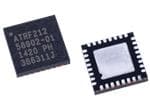

ATMEGA1284P-AU

Microchip Technology
556-ATMEGA1284P-AU
ATMEGA1284P-AU

Ürt.:

Açıklama:
8-bit Mikrodenetleyiciler - MCU 128KB Flash 20MHz 1.8V-5.5V

ECAD Modeli:
Bu dosyayı ECAD Aracınız için dönüştürmek için ücretsiz Library Loader dosyasını indirin. ECAD Model hakkında daha fazla bilgi edinin.

Stokta Var: 14.931

Stok:
14.931 Hemen Gönderilebilir
Fabrika Teslim Süresi:
6 Hafta Gösterilenden daha büyük miktarlar için fabrikada tahmini üretim süresi.
Minimum: 1   Çoklu: 1
Birim Fiyat:
-,-- €
Toplam Fiyat:
-,-- €
Tahmini Gümrük Vergisi:

Fiyatlandırma (EUR)

Miktar Birim Fiyat
Toplam Fiyat
5,56 € 5,56 €
5,55 € 55,50 €
5,20 € 130,00 €
4,99 € 499,00 €

Alternatif Ambalajlar

Ürt. Parça Numarası:
Paketleme:
Reel, Cut Tape, MouseReel
Stok Durumu:
Stokta Var
Fiyat:
6,15 €
Min:
1

Benzer Ürün

Microchip Technology ATMEGA1284P-AUR
Microchip Technology
8-bit Mikrodenetleyiciler - MCU AVR,128KB FLASH,1.8V 4KB EE 16KB SRAM

Ürün Niteliği Öznitelik Değeri Özellik Seçin
Microchip
Ürün Kategorisi: 8-bit Mikrodenetleyiciler - MCU
RoHS:  
AVR
128 kB
16 kB
TQFP-44
20 MHz
10 bit
32 I/O
1.8 V
5.5 V
SMD/SMT
8 bit
- 40 C
+ 85 C
ATmega1284
Tray
Marka: Microchip Technology
Veri RAM Tipi: SRAM
Veri ROM Boyutu: 4 kB
Veri ROM Tipi: EEPROM
Arayüz Türü: 2-Wire, SPI, USART
Neme Duyarlı: Yes
Zamanlayıcı/Sayaç Sayısı: 3 Timer
İşlemci Serisi: megaAVR
Ürün: MCUs
Ürün Tipi: 8-bit Microcontrollers - MCU
Program Bellek Türü: Flash
Fabrika Paket Miktarı: 160
Alt kategori:: Microcontrollers - MCU
Ticari Unvan: AVR
Birim Ağırlık: 2,188 g
Bulunan ürünler:
Benzer ürünleri göstermek için en az bir onay kutusu seçin
Bu kategorideki benzer ürünleri göstermek için yukarıda en az bir onay kutusu seçin.
Seçilen özellikler: 0

Bu işlev için JavaScript'in etkinleştirilmesi gerekir.

CNHTS:
8542319092
CAHTS:
8542310000
USHTS:
8542310015
JPHTS:
8542310324
KRHTS:
8542311000
TARIC:
8542319000
MXHTS:
8542310399
ECCN:
EAR99

Functional Safety Solutions

Microchip Technology Functional Safety Solutions offer robustness, reliability, and safety to end-products. In some application segments, these requirements are formalized and mandatory, while in others, they are implemented to differentiate the product and take the step from a good product to an excellent product. The standards for functional safety depend on the market that is targeted. Many standards support multiple levels of rigorousness, which are applied depending on the likelihood and severity of the hazard. The methods of addressing hazards range from detecting single failures and putting the system into a safe state to full redundancy, where failures should not only be detected but also corrected without any interruption or degradation of service.

megaAVR® CMOS 8-bit Microcontrollers

Microchip Technology megaAVR® CMOS 8-bit Microcontrollers are low-power microcontrollers that are based on the AVR® enhanced RISC architecture. The devices like ATmega164A, ATmega164PA, ATmega324A, ATmega324PA, ATmega644A, ATmega644PA, ATmega1284, and ATmega1284P fall under the megaAVR category of microcontrollers. These devices feature 16KB to 128KB FLASH memory, 1KB to 16KB SRAM, and 512bytes to 4KB EEPROM. The megaAVR devices execute instructions in a single clock cycle that helps the CPU to achieve a throughput of one Million Instructions Per Second (MIPS) per megahertz. This allows the system designer to optimize power consumption versus processing speed.

picoPower® Microcontrollers

Microchip picoPower® 8- and 32-bit low, high-performance Microcontrollers (MCUs) meet the tough requirements for portable and battery-operated applications. Microchip picoPower technology is found in the tinyAVR®, megaAVR®, AVR®, XMEGA™, and AVR UC3 MCUs. Microchip picoPower technology enables AVR MCUs to operate at the industry's lowest power consumption with 650 nA with an RTC running and 100 nA in Power Down sleep.

ATmega1284P 8-bit Microcontrollers

Atmel / Microchip ATmega1284P is a high-performance 8-bit AVR® RISC-based microcontroller that executes powerful instructions in a single clock cycle. Throughputs close to 1MIPS per MHz are achieved in a single clock cycle, giving the designer the benefit of optimizing the device for power consumption versus processing speed.